
The quickest way into this data is to read the shrine count and the temple count side by side, then look again at the same figures per 100,000 residents. The tile map and the full table below let you do both.
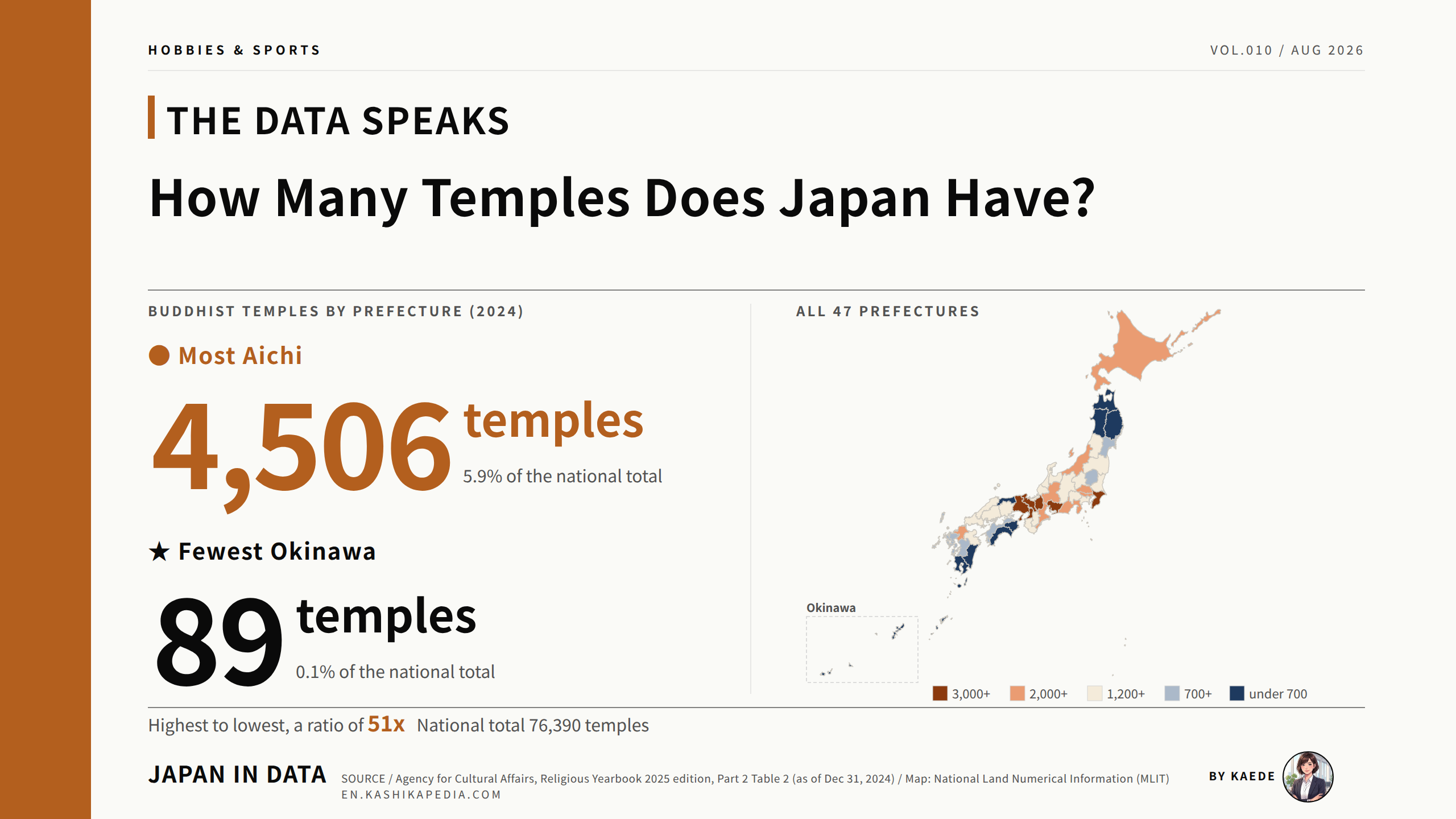
Japan had 76,390 registered Buddhist temples and 80,570 Shinto shrines at the end of 2024, or 156,960 sacred sites in total. Across the country that is one site for every 789 residents. The prefecture with the most temples is not Kyoto. It is Aichi, with 4,506.
The figures come from the Religious Yearbook, the annual count of registered religious organisations published by the Agency for Cultural Affairs, combined with population estimates from the Statistics Bureau of Japan. All 47 prefectures are mapped and ranked here, first by raw counts and then per 100,000 residents.
Japan is divided into 47 prefectures, the administrative tier below the national government. Shrines are Shinto, temples are Buddhist, and most people in Japan visit both without belonging to either as members. The survey used here counts religious organisations on the government register whose registered name is a shrine or a temple. It counts organisations, not buildings, and small unregistered roadside shrines fall outside it. Figures are as of December 31, 2024.
Agency for Cultural Affairs, Religious Yearbook 2025 edition, published December 2025.
How many temples does Japan have?
76,390 registered Buddhist temples, alongside 80,570 Shinto shrines. Aichi holds the most temples, Okinawa the fewest.
Researched and edited by Kaede, Data Editor, Japan in Data. Based in Saitama, Japan. Information is current at the time of writing. Figures and official definitions can change, so please check the primary sources for the latest position.
- Aichi Has the Most Shrines and Temples, Okinawa the Fewest
- All 47 Prefectures, Ranked by Shrines and Temples
- The Shrine List and the Temple List Are Not the Same
- Per 100,000 Residents, the Ranking Turns Over
- Some Prefectures Lean Towards Shrines, Others Towards Temples
- What the Register Actually Counts
- Kaede’s Summary: Three Observations from the Data
- Frequently Asked Questions
- About the Fact-Check for This Article
Aichi Has the Most Shrines and Temples, Okinawa the Fewest
A tile map keeps every prefecture the same size, so the eye is not pulled towards Hokkaido simply because it is large. Each tile shows shrines and temples added together.
*Compiled and edited by the Japan in Data editorial team based on official government statistics.
Aichi leads with 7,857 shrines and temples combined, followed by Niigata with 7,387 and Hyogo with 7,141. Kyoto and Nara, the two places most often described abroad as Japan’s temple cities, rank 8th and 23rd, with 4,803 and 3,180 sites.
At the other end, Okinawa has 103 sites in total: 14 shrines and 89 temples. Miyazaki follows with 1,021 and Tottori with 1,283. Okinawa is the only prefecture where churches outnumber shrines and temples combined, with 249 against 103.
Seven prefectures sit in the darkest band, at 5,000 sites or more: Aichi, Niigata, Hyogo, Chiba, Fukuoka, Gifu and Shizuoka. They belong to five different regions rather than to one part of the country. Five prefectures sit in the lightest band, under 1,500: Iwate, Aomori, Tottori, Miyazaki and Okinawa.
All 47 Prefectures, Ranked by Shrines and Temples
The table below carries every prefecture, with shrines and temples split out and the per 100,000 figure alongside. Use the regional tabs if you are looking for one particular place.
The list is ordered by shrines and temples combined, highest first. Reading the shrine column and the temple column separately is where the differences start to show.
Shrines and temples by prefecture, December 31, 2024 (highest total first)
| Rank | Prefecture | Total | Shrines | Temples | Per 100k |
|---|---|---|---|---|---|
| 1 | Aichi | 7,857 | 3,351 | 4,506 | 105.3 |
| 2 | Niigata | 7,387 | 4,657 | 2,730 | 351.9 |
| 3 | Hyogo | 7,141 | 3,858 | 3,283 | 133.8 |
| 4 | Chiba | 6,178 | 3,173 | 3,005 | 98.8 |
| 5 | Fukuoka | 5,746 | 3,403 | 2,343 | 112.8 |
| 6 | Gifu | 5,492 | 3,259 | 2,233 | 286.6 |
| 7 | Shizuoka | 5,444 | 2,842 | 2,602 | 154.4 |
| 8 | Kyoto | 4,803 | 1,760 | 3,043 | 190.6 |
| 9 | Shiga | 4,633 | 1,441 | 3,192 | 330.5 |
| 10 | Fukushima | 4,533 | 3,003 | 1,530 | 260.1 |
| 11 | Hiroshima | 4,353 | 2,653 | 1,700 | 160.4 |
| 12 | Tokyo | 4,335 | 1,457 | 2,878 | 30.6 |
| 13 | Saitama | 4,285 | 2,017 | 2,268 | 58.4 |
| 14 | Osaka | 4,088 | 738 | 3,350 | 46.7 |
| 15 | Nagano | 3,981 | 2,455 | 1,526 | 200.4 |
| 16 | Ibaraki | 3,783 | 2,486 | 1,297 | 134.8 |
| 17 | Toyama | 3,769 | 2,264 | 1,505 | 378.0 |
| 18 | Fukui | 3,371 | 1,706 | 1,665 | 456.2 |
| 19 | Oita | 3,337 | 2,109 | 1,228 | 307.6 |
| 20 | Ishikawa | 3,221 | 1,872 | 1,349 | 293.4 |
| 21 | Yamagata | 3,218 | 1,744 | 1,474 | 318.3 |
| 22 | Mie | 3,194 | 851 | 2,343 | 186.7 |
| 23 | Nara | 3,180 | 1,381 | 1,799 | 247.5 |
| 24 | Hokkaido | 3,101 | 793 | 2,308 | 61.5 |
| 25 | Kanagawa | 3,045 | 1,149 | 1,896 | 33.0 |
| 26 | Okayama | 3,045 | 1,651 | 1,394 | 166.3 |
| 27 | Tochigi | 2,901 | 1,909 | 992 | 153.9 |
| 28 | Yamanashi | 2,764 | 1,281 | 1,483 | 349.4 |
| 29 | Kumamoto | 2,567 | 1,389 | 1,178 | 151.3 |
| 30 | Kochi | 2,513 | 2,146 | 367 | 383.1 |
| 31 | Shimane | 2,452 | 1,170 | 1,282 | 381.9 |
| 32 | Gunma | 2,421 | 1,214 | 1,207 | 128.1 |
| 33 | Ehime | 2,304 | 1,245 | 1,059 | 180.6 |
| 34 | Saga | 2,183 | 1,105 | 1,078 | 277.0 |
| 35 | Yamaguchi | 2,159 | 751 | 1,408 | 168.5 |
| 36 | Nagasaki | 2,050 | 1,324 | 726 | 163.7 |
| 37 | Wakayama | 2,010 | 442 | 1,568 | 228.4 |
| 38 | Tokushima | 1,915 | 1,286 | 629 | 279.6 |
| 39 | Miyagi | 1,897 | 944 | 953 | 84.4 |
| 40 | Akita | 1,820 | 1,144 | 676 | 202.9 |
| 41 | Kagawa | 1,636 | 776 | 860 | 178.4 |
| 42 | Kagoshima | 1,597 | 1,118 | 479 | 104.2 |
| 43 | Iwate | 1,492 | 863 | 629 | 130.3 |
| 44 | Aomori | 1,352 | 885 | 467 | 116.1 |
| 45 | Tottori | 1,283 | 818 | 465 | 241.6 |
| 46 | Miyazaki | 1,021 | 673 | 348 | 98.8 |
| 47 | Okinawa | 103 | 14 | 89 | 7.0 |
| Rank | Prefecture | Total | Shrines | Temples | Per 100k |
|---|---|---|---|---|---|
| 10 | Fukushima | 4,533 | 3,003 | 1,530 | 260.1 |
| 21 | Yamagata | 3,218 | 1,744 | 1,474 | 318.3 |
| 24 | Hokkaido | 3,101 | 793 | 2,308 | 61.5 |
| 39 | Miyagi | 1,897 | 944 | 953 | 84.4 |
| 40 | Akita | 1,820 | 1,144 | 676 | 202.9 |
| 43 | Iwate | 1,492 | 863 | 629 | 130.3 |
| 44 | Aomori | 1,352 | 885 | 467 | 116.1 |
| Rank | Prefecture | Total | Shrines | Temples | Per 100k |
|---|---|---|---|---|---|
| 4 | Chiba | 6,178 | 3,173 | 3,005 | 98.8 |
| 12 | Tokyo | 4,335 | 1,457 | 2,878 | 30.6 |
| 13 | Saitama | 4,285 | 2,017 | 2,268 | 58.4 |
| 16 | Ibaraki | 3,783 | 2,486 | 1,297 | 134.8 |
| 25 | Kanagawa | 3,045 | 1,149 | 1,896 | 33.0 |
| 27 | Tochigi | 2,901 | 1,909 | 992 | 153.9 |
| 32 | Gunma | 2,421 | 1,214 | 1,207 | 128.1 |
| Rank | Prefecture | Total | Shrines | Temples | Per 100k |
|---|---|---|---|---|---|
| 1 | Aichi | 7,857 | 3,351 | 4,506 | 105.3 |
| 2 | Niigata | 7,387 | 4,657 | 2,730 | 351.9 |
| 6 | Gifu | 5,492 | 3,259 | 2,233 | 286.6 |
| 7 | Shizuoka | 5,444 | 2,842 | 2,602 | 154.4 |
| 15 | Nagano | 3,981 | 2,455 | 1,526 | 200.4 |
| 17 | Toyama | 3,769 | 2,264 | 1,505 | 378.0 |
| 18 | Fukui | 3,371 | 1,706 | 1,665 | 456.2 |
| 20 | Ishikawa | 3,221 | 1,872 | 1,349 | 293.4 |
| 28 | Yamanashi | 2,764 | 1,281 | 1,483 | 349.4 |
| Rank | Prefecture | Total | Shrines | Temples | Per 100k |
|---|---|---|---|---|---|
| 3 | Hyogo | 7,141 | 3,858 | 3,283 | 133.8 |
| 8 | Kyoto | 4,803 | 1,760 | 3,043 | 190.6 |
| 9 | Shiga | 4,633 | 1,441 | 3,192 | 330.5 |
| 14 | Osaka | 4,088 | 738 | 3,350 | 46.7 |
| 22 | Mie | 3,194 | 851 | 2,343 | 186.7 |
| 23 | Nara | 3,180 | 1,381 | 1,799 | 247.5 |
| 37 | Wakayama | 2,010 | 442 | 1,568 | 228.4 |
| Rank | Prefecture | Total | Shrines | Temples | Per 100k |
|---|---|---|---|---|---|
| 11 | Hiroshima | 4,353 | 2,653 | 1,700 | 160.4 |
| 26 | Okayama | 3,045 | 1,651 | 1,394 | 166.3 |
| 30 | Kochi | 2,513 | 2,146 | 367 | 383.1 |
| 31 | Shimane | 2,452 | 1,170 | 1,282 | 381.9 |
| 33 | Ehime | 2,304 | 1,245 | 1,059 | 180.6 |
| 35 | Yamaguchi | 2,159 | 751 | 1,408 | 168.5 |
| 38 | Tokushima | 1,915 | 1,286 | 629 | 279.6 |
| 41 | Kagawa | 1,636 | 776 | 860 | 178.4 |
| 45 | Tottori | 1,283 | 818 | 465 | 241.6 |
| Rank | Prefecture | Total | Shrines | Temples | Per 100k |
|---|---|---|---|---|---|
| 5 | Fukuoka | 5,746 | 3,403 | 2,343 | 112.8 |
| 19 | Oita | 3,337 | 2,109 | 1,228 | 307.6 |
| 29 | Kumamoto | 2,567 | 1,389 | 1,178 | 151.3 |
| 34 | Saga | 2,183 | 1,105 | 1,078 | 277.0 |
| 36 | Nagasaki | 2,050 | 1,324 | 726 | 163.7 |
| 42 | Kagoshima | 1,597 | 1,118 | 479 | 104.2 |
| 46 | Miyazaki | 1,021 | 673 | 348 | 98.8 |
| 47 | Okinawa | 103 | 14 | 89 | 7.0 |
*Compiled and edited by the Japan in Data editorial team based on official government statistics.
Population figures behind the per 100,000 column are published in thousands, so the rates are rounded to one decimal place. Prefectures separated by less than one point should be read as close rather than clearly apart.
The Shrine List and the Temple List Are Not the Same
Shrines and temples are counted separately in the survey, and the two top tens only half overlap. Placing them side by side on one scale shows where each tradition is concentrated.
*Compiled and edited by the Japan in Data editorial team based on official government statistics.
Niigata heads the shrine list with 4,657, ahead of Hyogo with 3,858 and Fukuoka with 3,403. The temple list opens with Aichi at 4,506, then Osaka at 3,350 and Hyogo at 3,283. Only five prefectures appear in both top tens.
Osaka shows the sharpest split. It ranks 2nd for temples with 3,350 but 46th for shrines with 738, ahead of Okinawa alone. Niigata runs the other way, 1st for shrines and 8th for temples.
Shiga is the clearest single case on the temple side. With a population of 1.4 million it holds 3,192 temples, more than Kyoto and more than Tokyo, while its shrine count of 1,441 places it in the middle of the national range.
Per 100,000 Residents, the Ranking Turns Over
Raw counts follow population to a large extent. Dividing by population produces a different list, and the lines below show how far individual prefectures move between the two.
*Compiled and edited by the Japan in Data editorial team based on official government statistics.
Fukui has 3,371 shrines and temples, 18th by raw count, but 456.2 per 100,000 residents, the highest in Japan. Kochi is 30th by count and 2nd per 100,000 with 383.1, and Shimane is 31st and 3rd with 381.9.
The metropolitan prefectures move the opposite way. Tokyo is 12th by raw count and 46th per 100,000 residents, with 30.6. Kanagawa is 25th and 45th, Saitama 13th and 43rd, and Osaka 14th and 44th. Okinawa is 47th on both measures with 7.0.
The gap between the top and bottom of the per 100,000 ranking is wide. Fukui’s 456.2 is 64.9 times Okinawa’s 7.0 and 14.9 times Tokyo’s 30.6, whereas the raw counts differ by a factor of 76.3 between Aichi and Okinawa.
Some Prefectures Lean Towards Shrines, Others Towards Temples
Dividing shrines by temples gives one number per prefecture. A value above 1.00 means more shrines than temples, and below 1.00 means the reverse.
*Compiled and edited by the Japan in Data editorial team based on official government statistics.
Kochi sits furthest to the shrine side at 5.85, with 2,146 shrines against 367 temples. Kagoshima follows at 2.33 and Tokushima at 2.04. Kochi’s ratio is more than twice that of the next prefecture on the list.
Okinawa is furthest to the temple side at 0.16, then Osaka at 0.22 and Wakayama at 0.28. Mie sits at 0.36 and Hokkaido at 0.34. Nationally the ratio is 1.05, so shrines and temples are close to even across Japan as a whole.
Twenty-two prefectures have more shrines than temples and 25 have more temples than shrines. The balance is therefore not a north to south or an east to west pattern, but varies prefecture by prefecture.
What the Register Actually Counts
Before comparing these numbers with other countries, it helps to know what the survey is measuring. Shrines and temples are two of five categories on the register.
*Compiled and edited by the Japan in Data editorial team based on official government statistics.
The register held 210,007 religious organisations at the end of 2024. Shrines account for 80,570 and temples for 76,390, together 74.7 per cent of the total. Churches account for 27,965, mission stations for 17,441 and other bodies for 7,641.
The count is of organisations rather than of buildings, and the two do not correspond one to one. A single shrine organisation may look after several smaller shrines, and many small roadside shrines are not registered at all. The yearbook itself notes that around 80,000 shrines hold corporate status while many others are maintained without it.
The total on the register fell by 384 organisations from the previous year. Shrine corporations fell by 99 and temple corporations by 109, while church corporations rose by 4.
Kaede’s Summary: Three Observations from the Data
Pulling the five figures together, three points stand out. None of them matches the picture that the words shrine and temple usually bring to mind outside Japan.
The answer to the opening question is 76,390 temples, alongside 80,570 shrines. The map behind that answer looks different depending on whether sites or people are counted.
Taken together, the three observations suggest a way of using this data. The rank order matters less than the two questions behind it: whether you are counting sites or counting people, and whether you are looking at shrines, at temples, or at both at once.
Frequently Asked Questions
Three questions come up most often about these figures. The answers stay inside what the published data can support.
Q1. How many temples are there in Japan?
There were 76,390 registered Buddhist temples as of December 31, 2024, according to the Agency for Cultural Affairs Religious Yearbook. The same survey counted 80,570 shrines, giving 156,960 shrines and temples in total. The figures count registered religious organisations rather than individual buildings.
Q2. Does Kyoto have the most temples?
No. Kyoto had 3,043 temples, which places it 5th. Aichi had 4,506, Osaka 3,350, Hyogo 3,283 and Shiga 3,192. Kyoto is 8th for shrines and temples combined. Four prefectures hold more temples than Kyoto does.
Q3. Are these figures the number of buildings I can visit?
Not directly. The survey counts organisations on the religious corporations register, and one organisation can maintain more than one site. Small unregistered shrines are not included at all. The numbers are best read as a measure of registered religious bodies rather than of visitable buildings.
About the Fact-Check for This Article
Japan in Data fact-checks its articles. The evidence behind the figures on this page is set out below.