
When comparing minimum wages across countries, the first step is to use the same yardstick. Setting three measures side by side (purchasing power parity, which evens out price differences, market exchange rates, and the ratio to domestic wages) gives a fuller picture of where Japan stands.
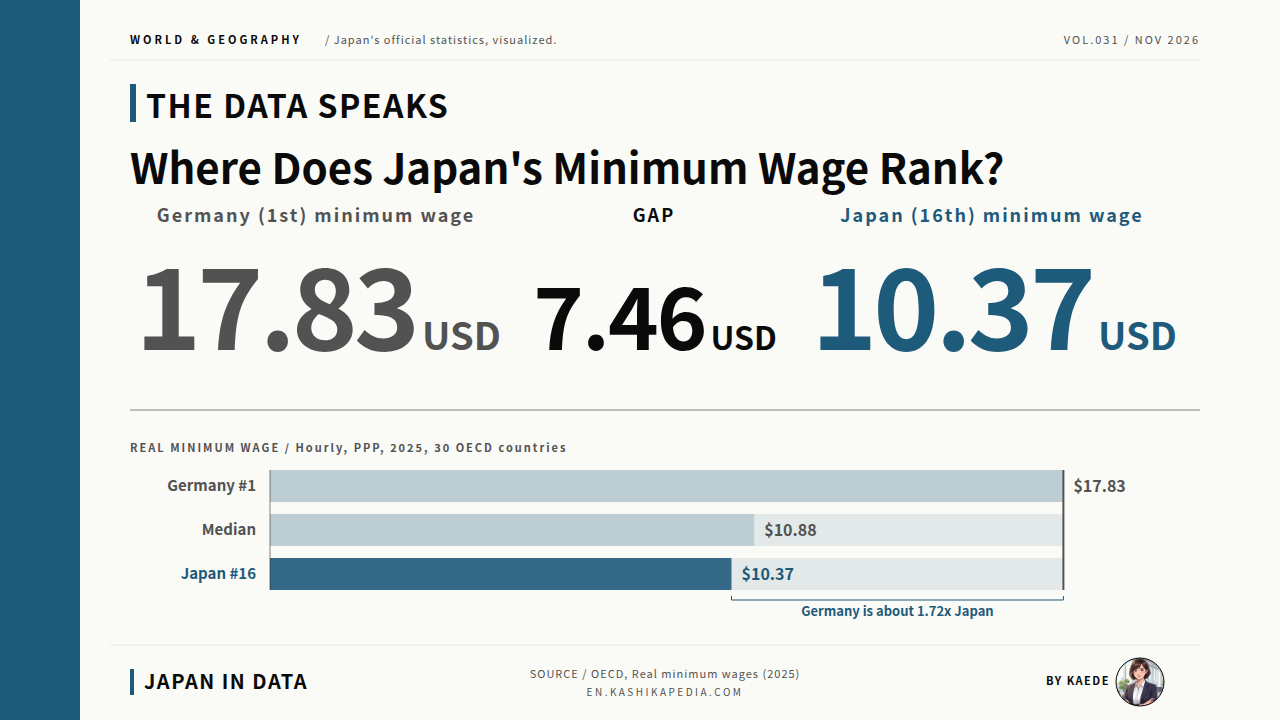
Converted at purchasing power parity (PPP), which evens out differences in prices, Japan’s minimum wage ranks 16th among the 30 OECD member countries with a national statutory minimum wage. In OECD data for 2025, Japan’s hourly rate is US$10.37 and first-placed Germany’s is $17.83. Japan’s level is about 60% (58.1%) of Germany’s. Matching the purchasing power of one hour at Germany’s minimum wage takes about 1 hour 43 minutes at Japan’s.
“Developed country” has no official definition, so this article uses membership of the OECD (Organisation for Economic Co-operation and Development) as a working proxy. Drawing on OECD data on real minimum wages and on minimum wages relative to median wages, international comparison tables from the Japan Institute for Labour Policy and Training (JILPT), and documents from the Ministry of Health, Labour and Welfare, it sets out Japan’s position on three measures and over 12 years.
Japan has no single national minimum wage. A separate hourly minimum is set for each prefecture, the country’s top-level administrative regions, and revised every year; the national figure usually quoted is the weighted average across prefectures. Revisions are labelled by Japan’s fiscal year, which runs from April to March; FY2026 began in April 2026. The OECD has 38 member countries, of which 30 have values in its minimum wage data. For the United States, the OECD uses the federal minimum wage.
Where does Japan’s minimum wage rank among developed countries?
Adjusted for price differences, 16th of 30 OECD countries, at about 60% of first-placed Germany.
Gap $7.46 (Germany about 1.72 times Japan)
* Figures compiled and edited by the Japan in Data editorial team from official data.
Figures are current as of the time of writing. Statistics, rules and services are subject to change, so please check the official sources for the latest information.
- Measured by Purchasing Power, Japan Ranks 16th of 30 OECD Countries
- On the Map, the Top Group Sits in Western Europe and Oceania
- At Exchange Rates, Japan Is Still 16th and Below the US Federal Minimum
- Against Domestic Wages, Japan Ranks 26th of 29
- Trends Since 2014: Korea Passed Japan in 2018
- All 30 Countries, and Minimum Wage Amounts in 2026
- Kaede’s Summary: Mid-Table on Amount, Near the Bottom Against Domestic Wages
- Frequently Asked Questions
- 🔍 About the Fact-Check for This Article
Measured by Purchasing Power, Japan Ranks 16th of 30 OECD Countries
Sorting the 30 bars from longest to shortest shows the distance from first place to last. It is also worth looking at where Japan’s bar sits against the dotted median line.
* Compiled and edited by the Japan in Data editorial team based on official government statistics.
Ranking the 30 member countries by OECD real minimum wage (2025, hourly, PPP), Germany comes first at $17.83, Luxembourg second at $17.75 and the United Kingdom third at $17.13. The top 10 consist of eight European countries plus Australia (4th) and New Zealand (8th) in Oceania. Japan is 16th at $10.37, with Korea (South Korea) 15th at $11.40 just above and Portugal 17th at $10.16 just below.
Japan sits just below the 30-country median of $10.88. The gap with first-placed Germany is $7.46, and Germany’s rate is about 1.72 times Japan’s. Expressed as time, earning the purchasing power of one hour at Germany’s minimum wage takes about 103 minutes at Japan’s minimum wage, or about 1 hour 43 minutes.
Among the six G7 countries with values in this OECD dataset, Japan ranks 5th, behind Germany, the United Kingdom, France and Canada, with the United States 6th. The US figure is the federal minimum wage of $7.25, 26th of the 30 countries. The federal minimum has stayed at $7.25 since July 2009, and state minimum wages can be higher; in JILPT data, the highest is the District of Columbia at $17.95.
On the Map, the Top Group Sits in Western Europe and Oceania
Shading a world map by level brings out regional groupings. Check which regions hold the darker shades, and which band Japan falls into.
* Compiled and edited by the Japan in Data editorial team based on official government statistics.
Split into five bands, the darkest band of $16 or more holds six countries: five in Western Europe (Germany, Luxembourg, the United Kingdom, the Netherlands and France) plus Australia. The $13 to $16 band contains Belgium, New Zealand, Spain, Ireland, Canada and Poland. Japan falls in the $10 to $13 band, the same shade as Slovenia, Lithuania, Korea and Portugal.
The $7 to $10 band contains nine countries: Israel, Czechia, Türkiye, Greece, Slovakia, Hungary, Estonia, Latvia and the United States (federal). The band below $7 is made up of four Latin American countries: Costa Rica, Chile, Colombia and Mexico. Countries shown in grey are either not OECD members or have no value in this dataset.
At Exchange Rates, Japan Is Still 16th and Below the US Federal Minimum
Measuring Japan’s position on three yardsticks (PPP, exchange rates and the ratio to domestic wages) lets the differences between them be compared at a glance. The further left a dot sits, the higher the rank.
* Compiled and edited by the Japan in Data editorial team based on official government statistics.
Purchasing power parity (PPP) is a conversion rate based on how much of each currency is needed to buy the same quantity of goods and services; it evens out price differences between countries before expressing values in dollars. Exchange-rate conversion simply uses that year’s market exchange rate. For the same minimum wage, the gap between the two conversions arises from the relationship between a country’s price level and its exchange rate.
At 2025 exchange rates, Japan’s minimum wage is $7.16 an hour, ranking 16th, the same as on the PPP basis. At exchange rates, Japan sits slightly below the US federal minimum wage of $7.25. Luxembourg ranks first at $17.51, followed by the United Kingdom at $15.83 and Australia at $15.81, while Germany, first on PPP, is 6th at $14.49.
Against Domestic Wages, Japan Ranks 26th of 29
How high a minimum wage is relative to what a country’s workers earn is measured as a share of the median wage. Note how much the order changes from the ranking by amount.
* Compiled and edited by the Japan in Data editorial team based on official government statistics.
The OECD also publishes the minimum wage as a share of the median wage of full-time workers. In 2025 Japan’s figure was 46.4%, 26th of the 29 countries with a value. Colombia was first at 90.5%, Costa Rica second at 84.7% and Mexico third at 74.9%: the Latin American countries near the bottom on PPP appear at the top on this measure.
Germany, at the top on amount, stands at 49.6% and the Netherlands at 48.3%, so the gap with Japan narrows on this measure. Korea is at 59.6%, the United Kingdom at 61.9% and France at 62.5%. Only three countries are below Japan: Latvia (44.8%), Estonia (42.7%) and the United States (24.1%). The ratio shows where the minimum sits within each country’s own wage distribution, and is separate information from the level of the amount.
Trends Since 2014: Korea Passed Japan in 2018
Drawn as lines, the twelve years show clearly how differently each country’s rate has grown. Look for the year where two lines cross, and for the line that slopes downward.
* Compiled and edited by the Japan in Data editorial team based on official government statistics.
Comparing real hourly rates at 2025 prices (PPP) between 2014 and 2025, Japan’s rose 21.5%, from $8.54 to $10.37. Over the same period Korea’s rose 55.5%, from $7.33 to $11.40, and the United Kingdom’s rose 36.4%, from $12.56 to $17.13. OECD values for Germany start in 2015, so measured from its 2015 figure of $15.20, Germany’s rose 17.3%.
In 2018 Korea reached $10.07, passing Japan ($9.30) for the first time since 2014. In 2017 Korea had been at $8.78 and Japan at $9.11. Because the US federal minimum has stayed at $7.25 in nominal terms, its real value after removing price changes fell 26.5%, from $9.87 in 2014 to $7.25 in 2025.
Japan’s rank among the countries with data moved from 13th in 2014 (out of 29, as Germany has no value that year) to 14th in 2015 to 2017, 15th in 2018, 14th in 2019, 15th in 2020 to 2023, and 16th in 2024 and 2025.
All 30 Countries, and Minimum Wage Amounts in 2026
The table lets you check any country’s position by region. Switching tabs shows only the countries in Europe, in Asia-Pacific and the Middle East, or in the Americas.
Rank is by PPP hourly wage among the 30 countries. PPP and exchange-rate columns show hourly wages in US$ at 2025 prices; % of median is the share of the median full-time wage.
| Rank | Country | PPP basis | Exchange rate | % of median |
|---|---|---|---|---|
| 1 | Germany | 17.83 | 14.49 | 49.6% |
| 2 | Luxembourg | 17.75 | 17.51 | 56.4% |
| 3 | United Kingdom | 17.13 | 15.83 | 61.9% |
| 4 | Australia | 16.75 | 15.81 | 54.5% |
| 5 | Netherlands | 16.71 | 14.49 | 48.3% |
| 6 | France | 16.22 | 13.42 | 62.5% |
| 7 | Belgium | 15.72 | 13.71 | 47.5% |
| 8 | New Zealand | 15.31 | 13.61 | 64.0% |
| 9 | Spain | 15.23 | 10.46 | 55.3% |
| 10 | Ireland | 14.93 | 15.25 | 51.1% |
| 11 | Canada | 13.15 | 11.85 | 49.2% |
| 12 | Poland | 13.01 | 7.14 | 59.2% |
| 13 | Slovenia | 12.40 | 8.31 | 58.5% |
| 14 | Lithuania | 11.55 | 7.18 | 50.1% |
| 15 | Korea | 11.40 | 7.05 | 59.6% |
| 16 | Japan | 10.37 | 7.16 | 46.4% |
| 17 | Portugal | 10.16 | 6.60 | 58.9% |
| 18 | Israel | 9.25 | 9.80 | 50.7% |
| 19 | Czechia | 8.86 | 5.93 | 46.9% |
| 20 | Türkiye | 8.43 | 3.79 | 47.2% |
| 21 | Greece | 8.35 | 5.47 | 50.1% |
| 22 | Slovakia | 8.29 | 5.30 | 51.5% |
| 23 | Hungary | 8.17 | 4.73 | 47.6% |
| 24 | Estonia | 7.90 | 6.00 | 42.7% |
| 25 | Latvia | 7.71 | 4.81 | 44.8% |
| 26 | US (federal) | 7.25 | 7.25 | 24.1% |
| 27 | Costa Rica | 5.60 | 3.50 | 84.7% |
| 28 | Chile | 5.46 | 2.79 | n/a |
| 29 | Colombia | 4.10 | 1.68 | 90.5% |
| 30 | Mexico | 3.08 | 1.81 | 74.9% |
| Rank | Country | PPP basis | Exchange rate | % of median |
|---|---|---|---|---|
| 1 | Germany | 17.83 | 14.49 | 49.6% |
| 2 | Luxembourg | 17.75 | 17.51 | 56.4% |
| 3 | United Kingdom | 17.13 | 15.83 | 61.9% |
| 5 | Netherlands | 16.71 | 14.49 | 48.3% |
| 6 | France | 16.22 | 13.42 | 62.5% |
| 7 | Belgium | 15.72 | 13.71 | 47.5% |
| 9 | Spain | 15.23 | 10.46 | 55.3% |
| 10 | Ireland | 14.93 | 15.25 | 51.1% |
| 12 | Poland | 13.01 | 7.14 | 59.2% |
| 13 | Slovenia | 12.40 | 8.31 | 58.5% |
| 14 | Lithuania | 11.55 | 7.18 | 50.1% |
| 17 | Portugal | 10.16 | 6.60 | 58.9% |
| 19 | Czechia | 8.86 | 5.93 | 46.9% |
| 20 | Türkiye | 8.43 | 3.79 | 47.2% |
| 21 | Greece | 8.35 | 5.47 | 50.1% |
| 22 | Slovakia | 8.29 | 5.30 | 51.5% |
| 23 | Hungary | 8.17 | 4.73 | 47.6% |
| 24 | Estonia | 7.90 | 6.00 | 42.7% |
| 25 | Latvia | 7.71 | 4.81 | 44.8% |
| Rank | Country | PPP basis | Exchange rate | % of median |
|---|---|---|---|---|
| 4 | Australia | 16.75 | 15.81 | 54.5% |
| 8 | New Zealand | 15.31 | 13.61 | 64.0% |
| 15 | Korea | 11.40 | 7.05 | 59.6% |
| 16 | Japan | 10.37 | 7.16 | 46.4% |
| 18 | Israel | 9.25 | 9.80 | 50.7% |
| Rank | Country | PPP basis | Exchange rate | % of median |
|---|---|---|---|---|
| 11 | Canada | 13.15 | 11.85 | 49.2% |
| 26 | US (federal) | 7.25 | 7.25 | 24.1% |
| 27 | Costa Rica | 5.60 | 3.50 | 84.7% |
| 28 | Chile | 5.46 | 2.79 | n/a |
| 29 | Colombia | 4.10 | 1.68 | 90.5% |
| 30 | Mexico | 3.08 | 1.81 | 74.9% |
* Compiled and edited by the Japan in Data editorial team based on official government statistics.
The OECD values are real figures for 2025 with price changes removed, and differ from actual amounts in each national currency. According to JILPT’s international comparison tables, hourly minimum wages as of January 1, 2026 were €13.90 in Germany, €12.02 in France, £12.21 in the United Kingdom, 10,320 won in Korea and $7.25 in the United States (federal). Australia’s is A$24.95, revised every July 1.
In the same tables, Japan’s figure is ¥1,121, the national weighted average for FY2025 (April 2025 to March 2026). Under the FY2026 revision, the national weighted average became ¥1,177, with the highest rate at ¥1,280 in Tokyo and the lowest at ¥1,085 in Miyazaki Prefecture.
Kaede’s Summary: Mid-Table on Amount, Near the Bottom Against Domestic Wages
Setting the rankings and trends side by side shows that Japan’s position shifts slightly with each yardstick. Here they are arranged as three observations.
To address where Japan’s minimum wage ranks among developed countries, this article has set out three measures for 30 OECD member countries (PPP, exchange rates and the ratio to the median wage), along with the trend since 2014. The differences between the measures are summarised below as observations.
Taken together, the three observations show Japan’s minimum wage sitting mid-table among the 30 countries by amount, and near the bottom relative to domestic wages. The FY2026 revision raised the national weighted average to ¥1,177, but this is not yet reflected in the OECD’s 2025 data. When the OECD next updates its data, Japan’s position can be checked again on the same three measures.
Frequently Asked Questions
When reading an international comparison of minimum wages, check three things together: the conversion method, the set of countries compared and the date of the data. For the same country, a change in any of these can change the rank.
Q1. Why Compare Using Purchasing Power Parity?
Exchange rates move widely for reasons other than prices, so a comparison based only on exchange rates makes it hard to see how many goods and services a minimum wage buys in each country. PPP is a conversion rate that evens out price differences between countries, and the OECD’s real minimum wage data are published on both a PPP and an exchange-rate basis. This article uses PPP as its main measure and shows the exchange-rate values alongside.
Q2. Why Are Italy and the Nordic Countries Not Included?
These countries have no values in the OECD’s real minimum wage data. Of the 38 OECD member countries, 30 have data and 8 do not. Rankings in this article are counted among the 30 countries with values. Comparisons within the G7 likewise count only the six countries with values, leaving out any country without one.
Q3. When Is Japan’s Minimum Wage Revised?
Japan’s minimum wages are revised every year for each prefecture, and the effective date differs by prefecture. According to the Ministry of Health, Labour and Welfare, the FY2026 revision sets the national weighted average at ¥1,177, up ¥56 on the previous year, taking effect in stages from October 1, 2026 to December 2, 2026. Tokyo, the highest, was scheduled to take effect on October 1, and Miyazaki, the lowest, on October 24.
🔍 About the Fact-Check for This Article
Japan in Data fact-checks its articles. The evidence behind the fact-check for this page is set out below.